Back to Journal

Kinlett Coffee: A Rather Decent Brand Story

Brand Communication Brand Identity October 22, 2026 5 min read
Me

Kasia Gumowska
Senior Copywriter & Communication Strategist

kinlett-journal-hero

The instant coffee dilemma

Some brands start with a story and spend years finding the product to match. Kinlett started with the product and a blank page.

When Kinlett’s founder first approached Tinge Studio, he’d already done the heavy lifting. He found a problem and provided a solution: a premium instant coffee that had absolutely no business being as good as it was.

Produced in Switzerland from a calibrated blend refined into signature granules, Kinlett delivered a surprisingly sophisticated coffee experience in a format most people associate with convenience rather than craft and care.

Because instant coffee has a reputation: not particularly worth sharing. This, however, was different. The challenge was to communicate Kinlett’s quality without falling into the clichés of coffee culture. Our task? To find a story that could bridge the gap.

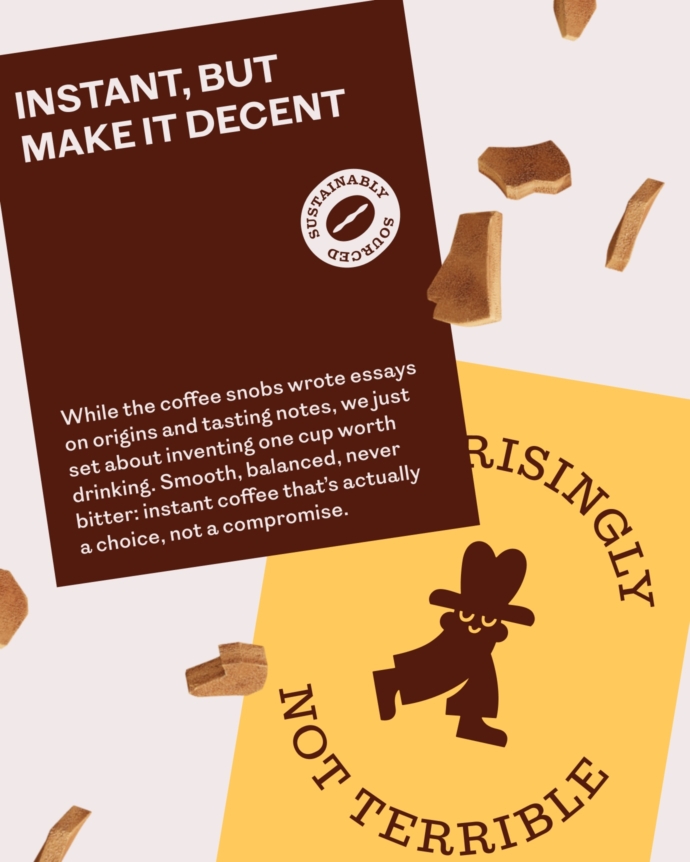
kinlett-world-collage

Kinlett World

Several decks and a lot of coffee later

Before exploring creative directions, we started where we always do – with research. We analysed everything from competitors, trends and consumer behaviour to sustainability concerns, health perceptions and shifting expectations across generations.

The research revealed several interesting tensions. Consumers increasingly value convenience, but they’re no longer willing to compromise on taste. Younger audiences are drawn to brands with personality and vision, while older buyers continue to value familiarity. Yet none of it seemed to matter, as much of the coffee category was speaking in remarkably similar ways.

Coffee has overtaken tea as Britain’s favourite hot drink. 77% of UK households buy instant coffee. 65% of Brits drink coffee every single day. The premium coffee market is growing by 8.3% annually.

Sources: STiR Tea & Coffee, British Coffee Association, Statista

The Great British Understatement

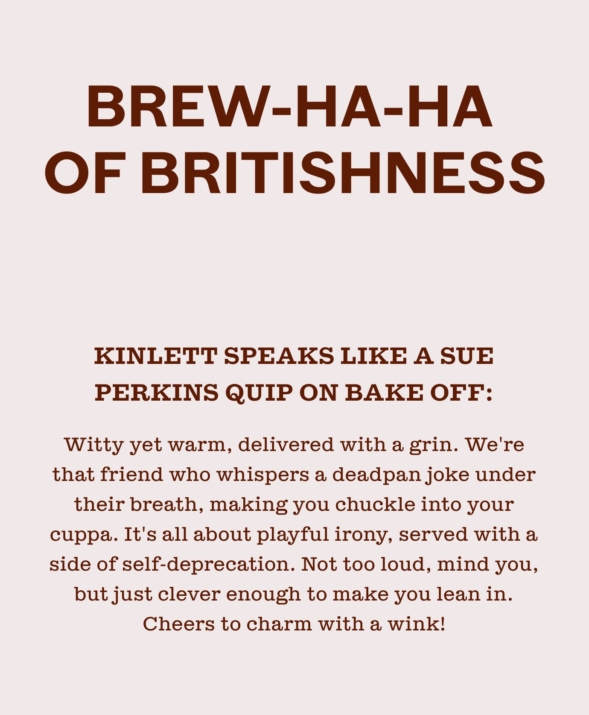
That thought led us to develop a strategic direction rooted in one of Britain’s most enduring cultural traits: The Great British Understatement. Inspired by the national tendency to describe something objectively brilliant as “not bad, actually”, the concept turned traditional premium coffee marketing on its head.

In a category built on bold claims, Kinlett would prefer not to make a fuss. While others reached for “award-winning” and “industry-leading”, Kinlett settled on “surprisingly not terrible”. The brand didn’t need to tell you how good it was, letting the coffee do the talking.

By drawing on a shared cultural quirk rather than a witty claim, the idea gave the brand depth and relevance beyond the product itself. From there, it all began to fall into place.


kinlett-slide-brew-ha-ha

British, but not in the obvious way

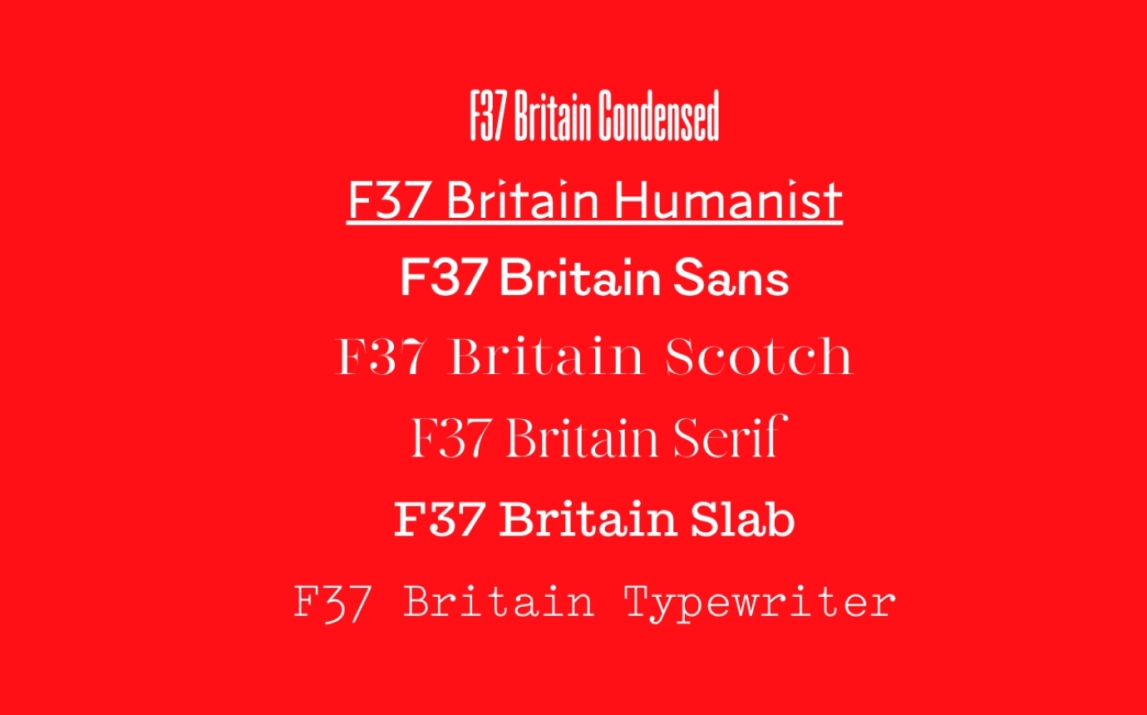
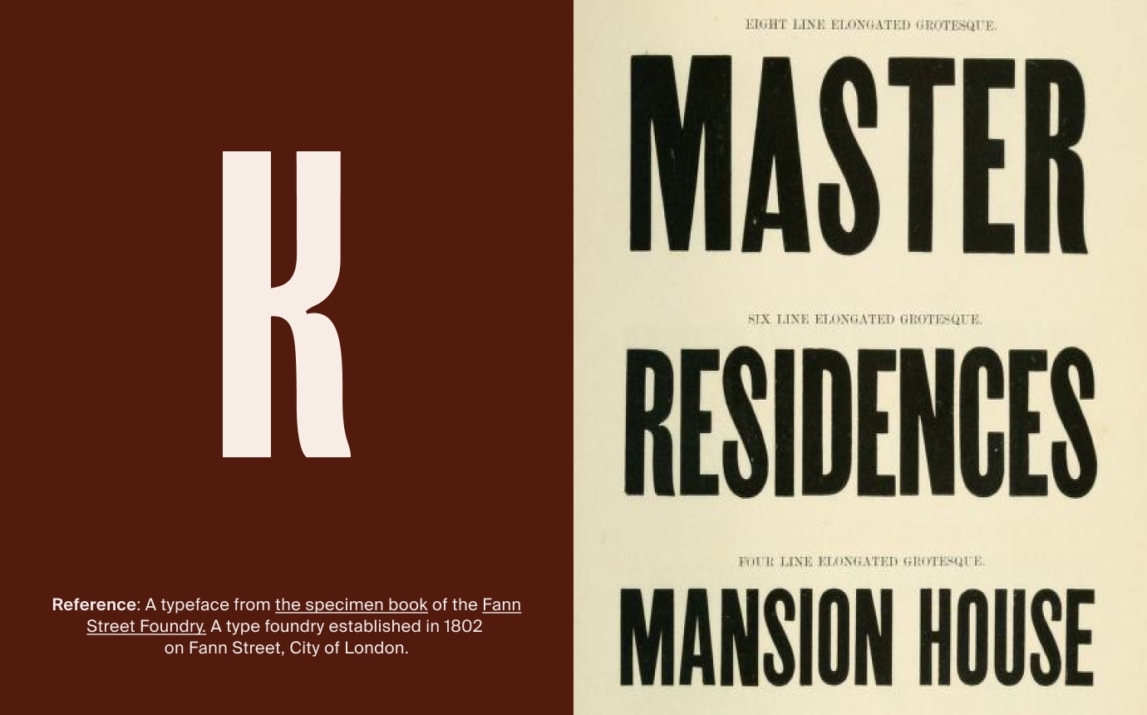
The chosen typeface is part of F37 Britain, a collection of seven fonts rooted in the nation’s visual history. “A nod to the past while looking stiff-upper-lipped into the future,” as the description reads, it was the natural choice for a brand that raises an eyebrow where others raise their voice.

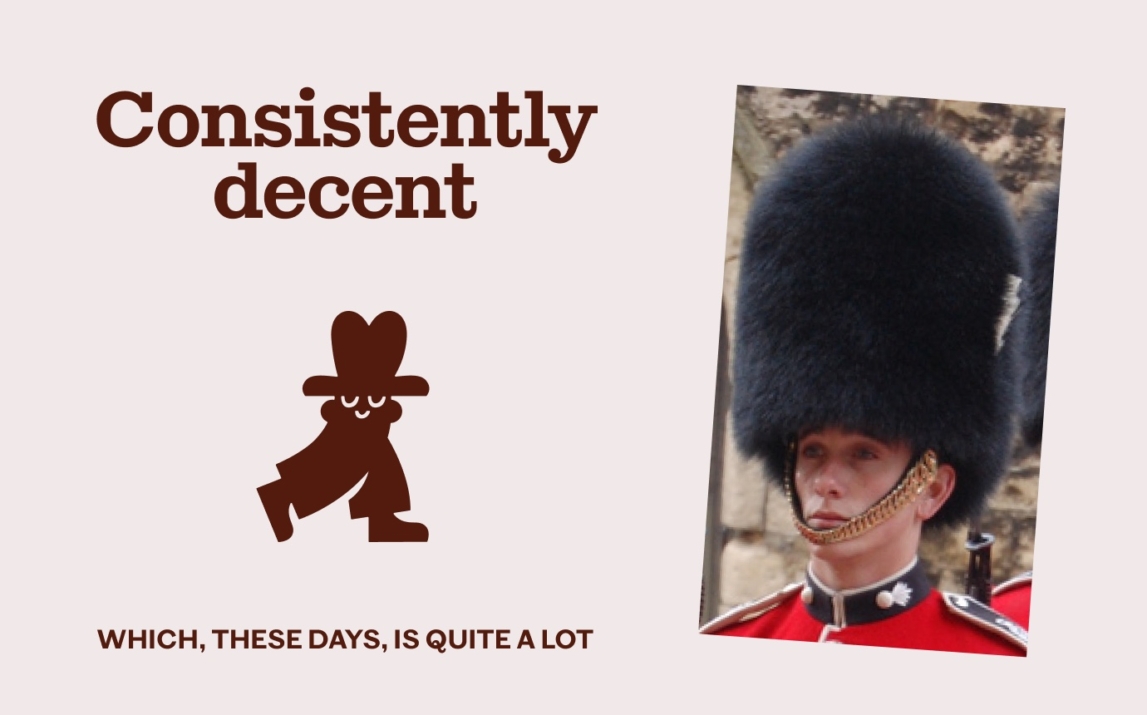
That same sensibility informed every other decision – from the stripe motif, nodding to tartan traditions, to the final piece: a brand mascot, the King’s Guard, reimagined with a cheeky twist. Combined with a thoughtful colour palette enlivened by vibrant accents, what emerged was unmistakably British, without a stereotype in sight.

Drawing on cultural heritage gave the brand relevance beyond the category.

kinlett-slide-b1-f37-britain
kinlett-slide-b2-consistently-decent
kinlett-slide-b3-fann-street

From idea to first brew

With the foundations in place, we stayed close to the brand, right through to launch – from packaging and copywriting to social media assets and activation support, all shaped by the same strategic idea.

This is how Kinlett came to life: a premium coffee that doesn’t behave like one. A thoroughly modern product wrapped in a distinctly British identity.
And, if we may say so ourselves, quite a decent example of strategy doing its job.